

Olivia Walker in conversation with Angel Monzon, Vessel Gallery Director
14th October 2026

Olivia Walker in conversation with Angel Monzon, Vessel Gallery Director
With her forthcoming 1st UK solo exhibition Layer by Layer commencing at Vessel Gallery on the 9th November, Olivia Walker discusses how she began her practice and how clay, porcelain in particular, became her medium of choice.
![]()
How did you get started with ceramics and what ‘drew’ you to the material?
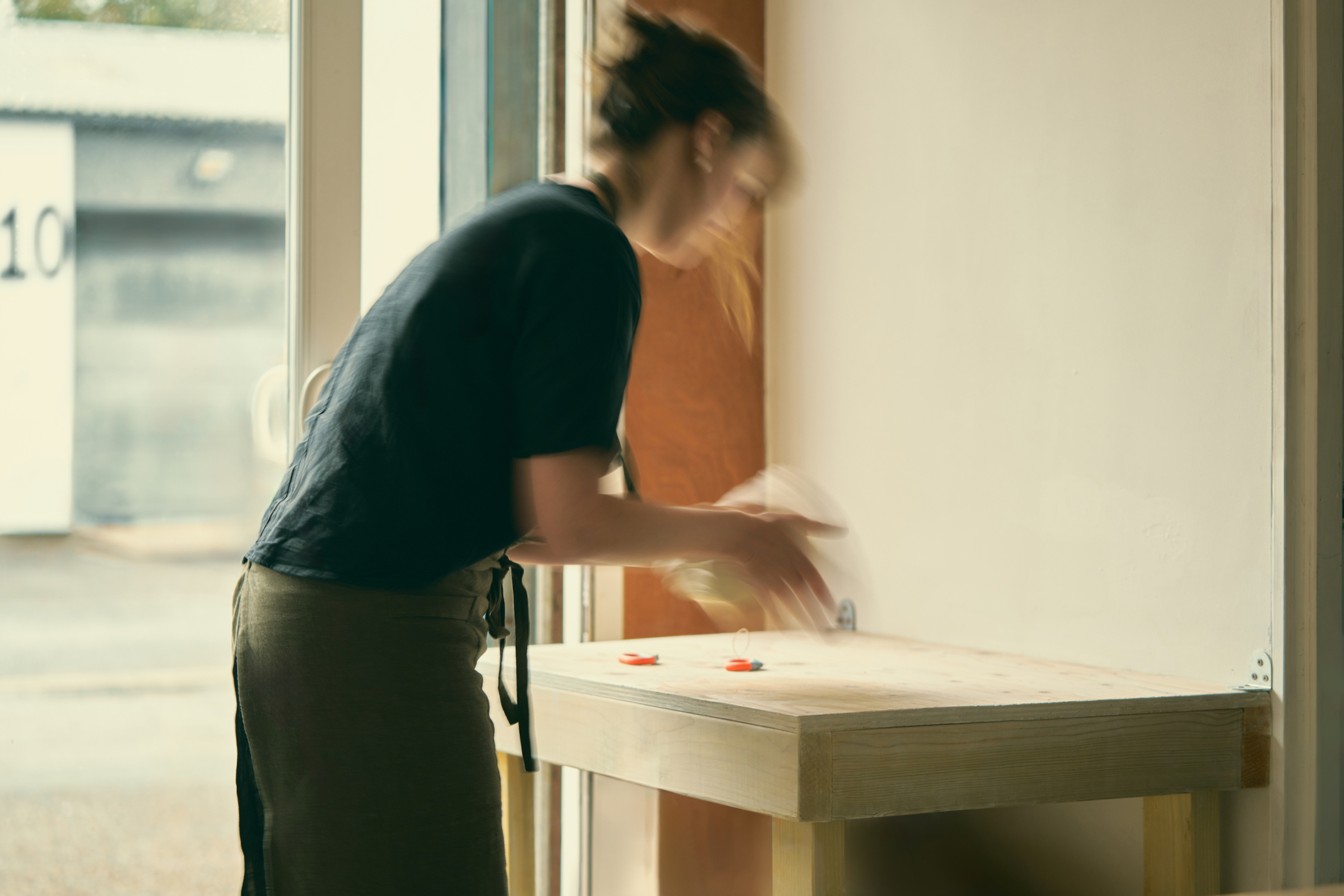
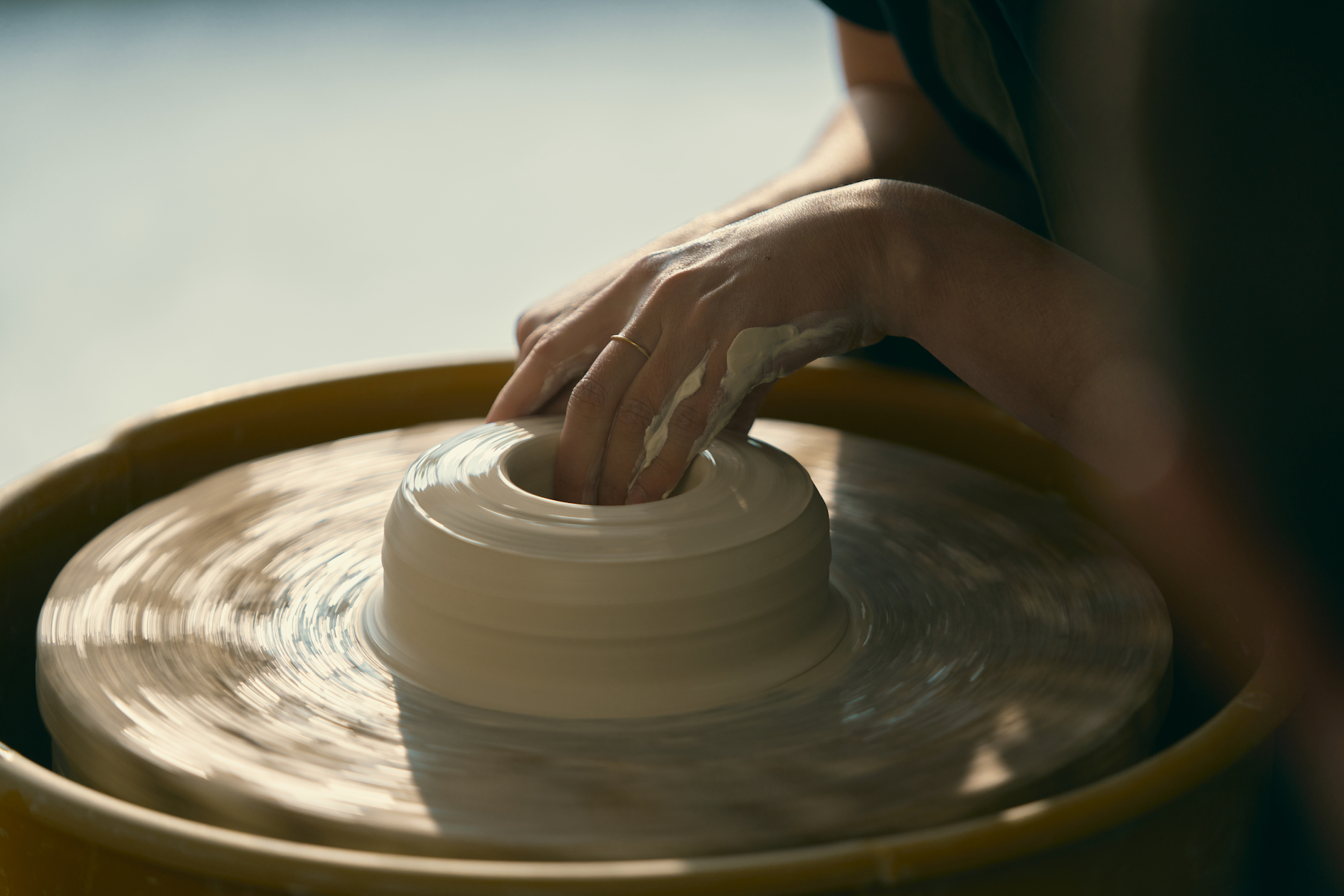
I fell in love with clay almost two decades ago, working in a craft gallery in Dartington in Devon. It was the picking up, handling and talking about the pottery in the gallery that started me on my obsession with the material. From here I started reading about the subject and I enrolled in an evening throwing course, and I kept starting new courses and getting more engaged with the material until finally I enrolled on an MA course in 2012. It’s the changing states of clay that I find so appealing - the soft malleable clay you start with, to the ‘leather hard’ clay, which is perfect for carving and refining, to the final fired state of ceramic.
![]()
What do you find to be the most challenging aspect of your practice?
The most challenging aspect of my work is the firing process, and the unpredictability of making work in porcelain. I push the material quite far in terms of what porcelain can handle. My forms can be heavily built-up with uneven weight distribution and porcelain is a material that is typically fired quite high (I fire my pieces at around 1280 degrees Celsius). At this temperature porcelain can sag, move and crack. My pieces take many weeks to complete and yet it’s only at this very last stage in the process that I will find out if it will survive or not.
![]()
To date, what has been your ‘ceramic career’ high?
The exhibitions and showcases I have been part of through Vessel Gallery have been so rewarding over the years. I have been lucky enough to have had my work taken to Collect, both at the Saatchi Gallery and at Somerset House, as well as being part of wonderful shows such as Artefact at the Design Centre in Chelsea Harbour. I recently had my first solo exhibition in South Korea which was definitely a career highlight, I felt very lucky to show a varied body of work together in one space to a new audience.
![]()
How do you feel about the state of British ceramics today?
I think British ceramics is an a really strong place at the moment. It is a very varied world, from the academic and conceptual space where the material is used to convey ideas, all the way through to the co-working studios popping up all over the country letting people explore the material in their own personal ways. I think there is a real love and appreciation for the material, and the old dialogue around what is ‘art’ and what is ‘craft’ feels less and less relevant.
![]()
Which living ceramic artist do you most admire and why?
The living ceramic artist that I most admire is Magdalene Odundo. It was discovering Magdelene’s work when I was in my early 20s that really captured me and helped me to understand the medium as something meaningful. Her knowledge of process and material is so incredible but she uses these to create forms which are something more than the sum of their parts, and which create real meaning in the viewer. When I was just starting out on my journey I emailed her as I had seen that she taught on the MA at the UCA in Farnham. I mentioned that I was soon to go and work in Tokyo for six months and she (having never met me) sent me off to visit her friend, an eminent professor of ceramics, at Tokyo University of the Arts. I later studied under her at the UCA, and I admire her both for her work but also for her generosity of spirit.
![]()
If you could collaborate with any artist, from any background, who would that be and why?
If I could collaborate with an artist from any background I think it would be someone who uses clay in a completely different way to me and who uses different firing techniques. Tomonari Hashimoto is a good example of this and someone who uses a low temperature gas firing to create a carbonising atmosphere. His work is beautiful for the patinas he creates through the firing process. I currently use an electric kiln which fires my pieces in a straight-forward way, but I like the idea of using the firing as another element in the creation of a piece.
![]()
Can you share any future plans? Either ones set in stone or something you would love to make happen?
I have a large commission which I will be working on into Spring of next year, and which will involve me making a large group of wall pieces to go into a corporate HQ. After this I have a bit more space, after what has been a very busy year. I want to use this time to explore some new directions in my work. This will potentially include exploring glaze and glazed surfaces, which is something I have been having a long term affair with, but which I have never directly used on this body of work.
![]()
View Olivia Walker's portfolio
Layer by Layer
Exhibition dates 9/11/26 - 21/12/26
About the Artist
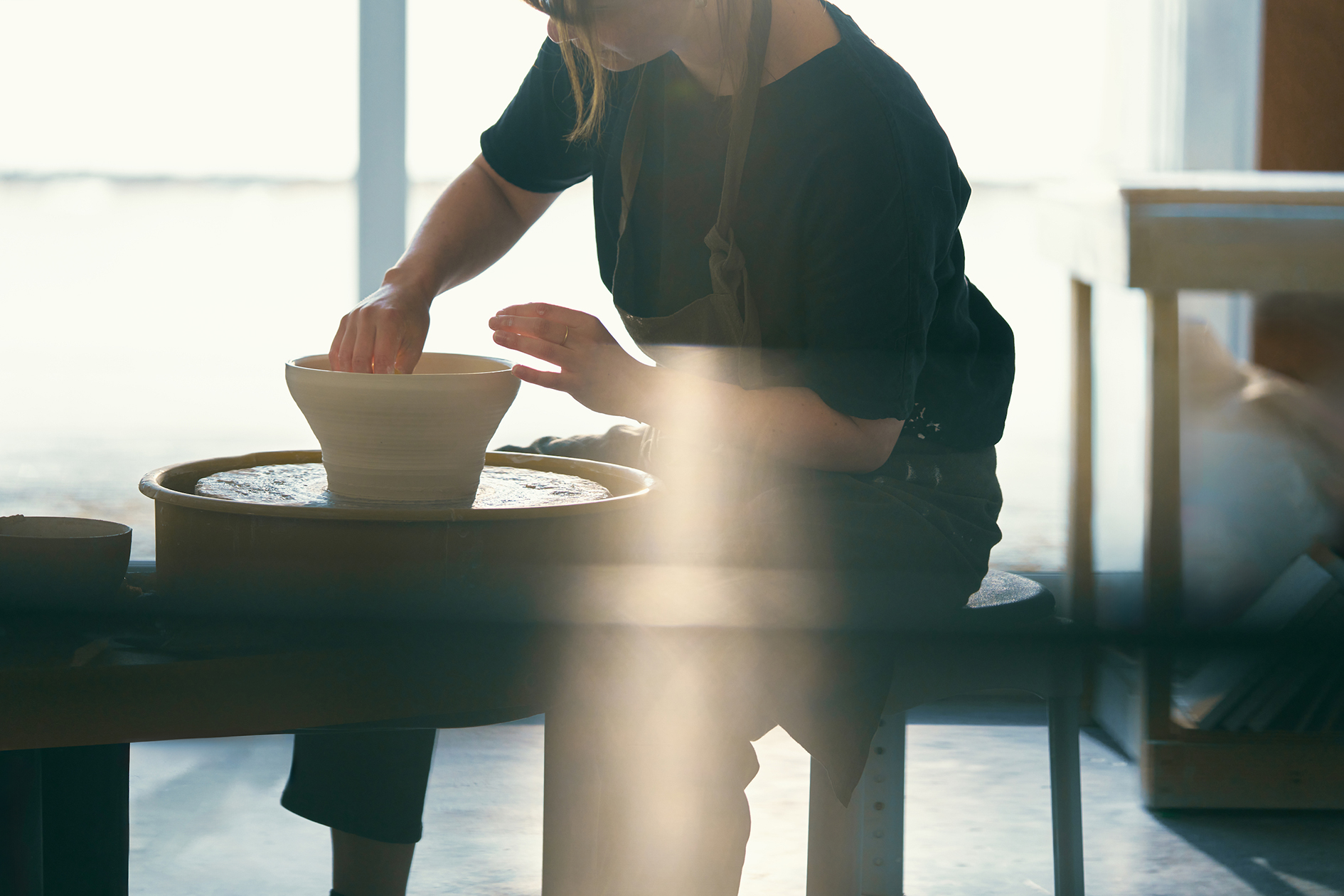
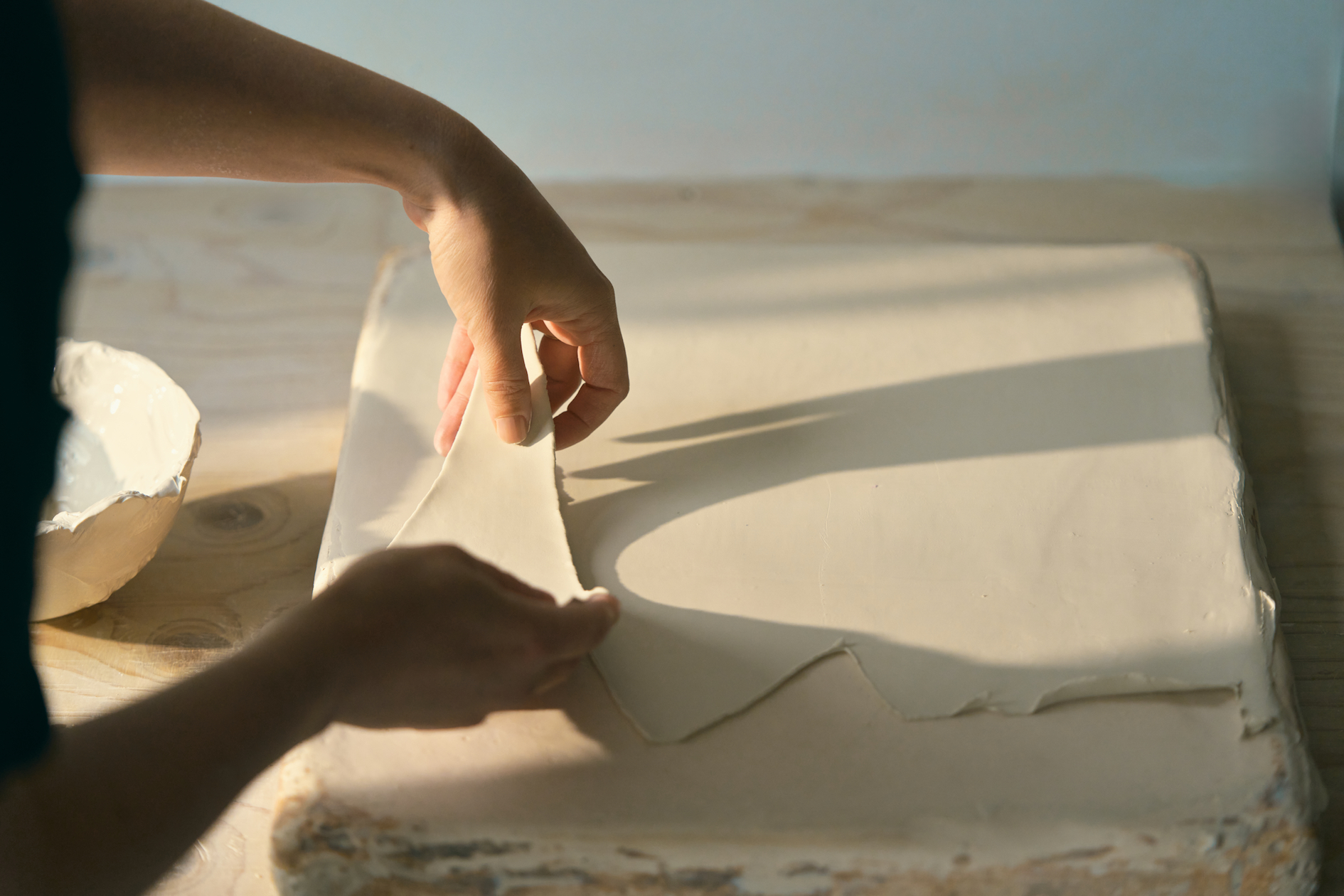
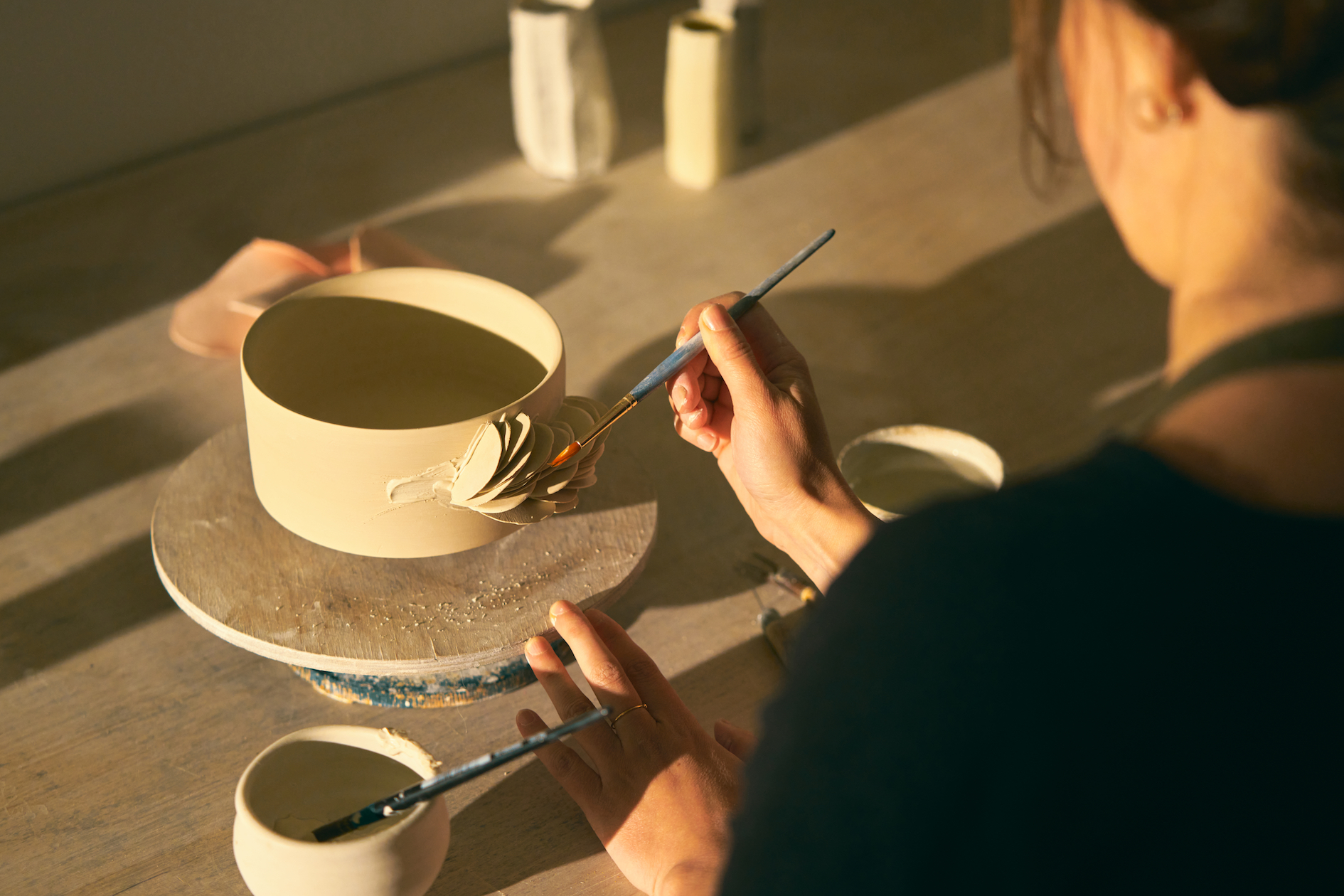
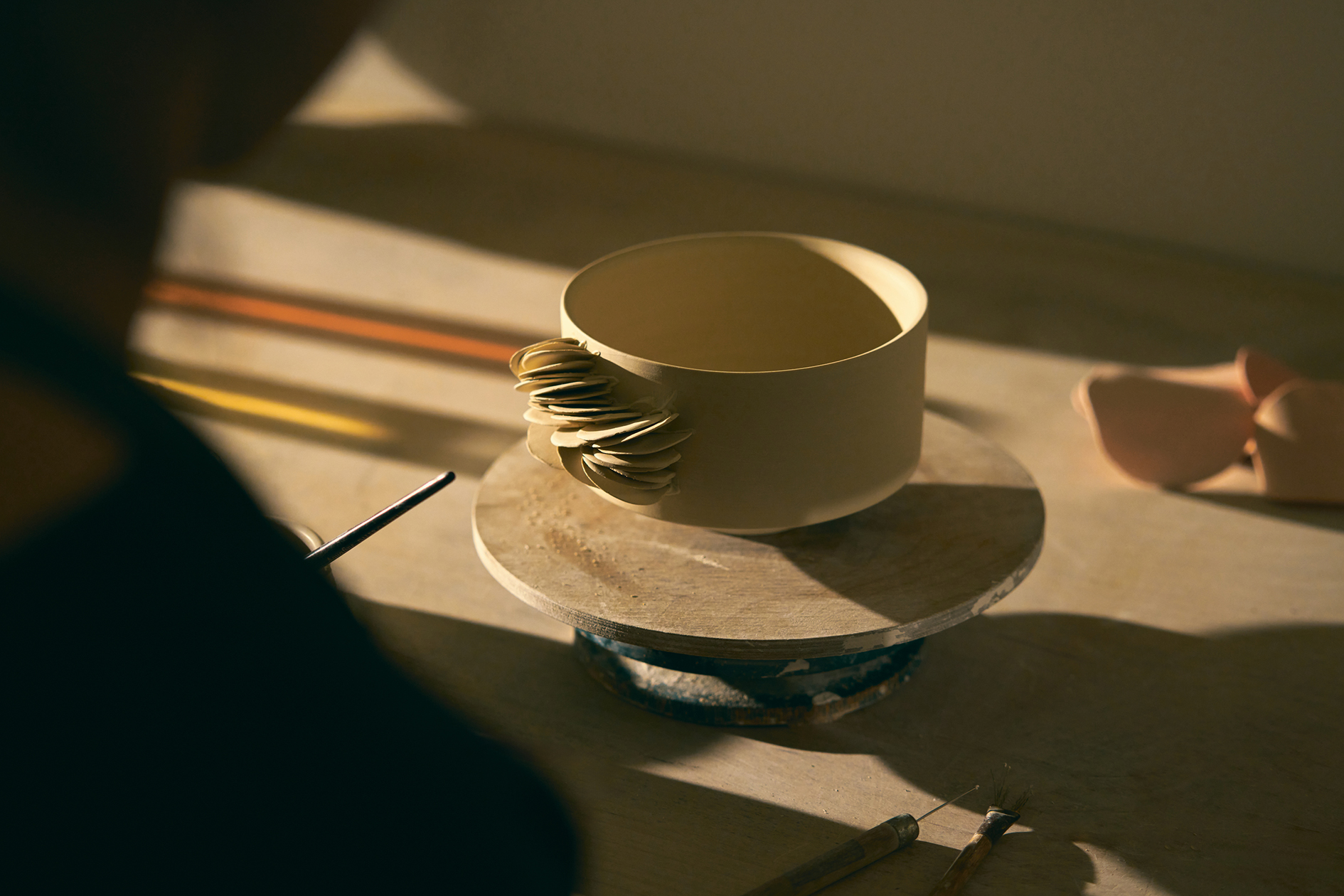
Olivia Walker works in porcelain to create pieces that explore ideas of growth and decay through the construction and layering of complex surfaces. All of her pieces start by being thrown on the wheel, before being built upon with thousands of individually applied fragments of porcelain. Many of her pieces are thrown and altered, often being cut away and reassembled in the leather-hard stage which allows her to deconstruct the form creating new surfaces on which to continue adding her porcelain layers.
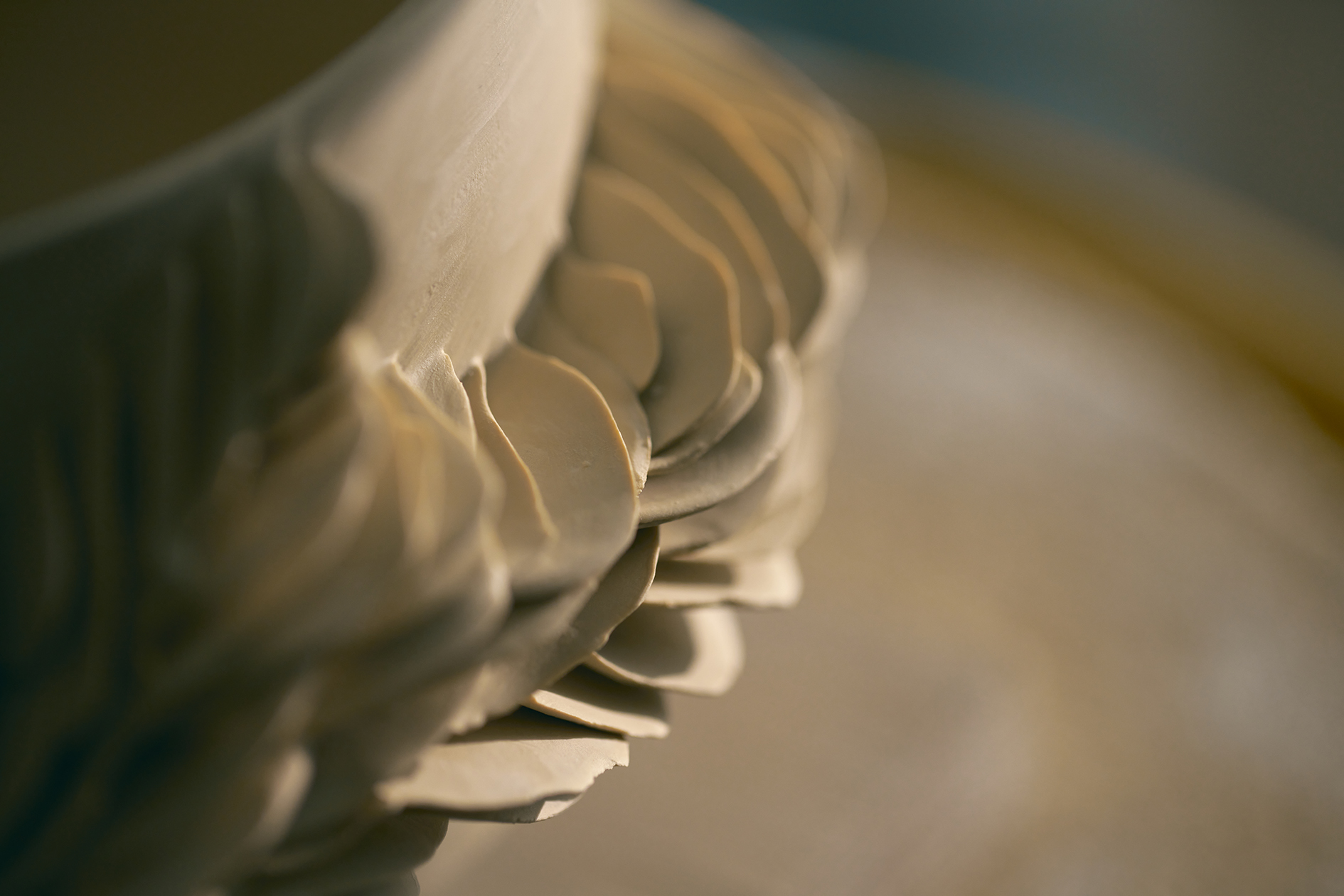
Starting from a set point on a piece, Walker lets these organic accretions spread out and grow, almost eating through, or growing over the form beneath and covering it. Walker makes reference to organisms such as fungus, corals and bacteria but her pieces are her own interpretation, letting the viewer bring their own ideas and emotions to her pieces.
In the artist’s own words:
“My work is inspired by nature, organic life and in particular the build-up of small, repeated forms. I explore these ideas through surfaces that are made up of thousands of fragments of porcelain, and that are designed to evoke an emotional response in the viewer. The forms reference organic matter - the underside of a mushroom, bacteria, slate cliffs - but remain unidentifiable; an allusion to a nature that is amorphous, growing and consuming. My vessels are deconstructed - I cut away at the thrown form to explore the relationship between growth and decay - how decay leads to renewed life and reclamation in nature. In recent years I have expanded these ideas to the wall, and began creating my collapsed wall piece series, which operates in the space between art, design and craft.”
Walker studied at Farnham in 2014 where she completed her MA in Contemporary Craft, specialising in Ceramics. An apprenticeship with the highly revered potter and writer, Julian Stair, gave her invaluable insight into the practice of running a ceramic studio and also the opportunity to further hone her skills. She has exhibited extensively throughout the UK & Europe, as well as in South Korea, Australia and the USA.
Images courtesy of Lallier Champagne & Olivia Walker
With her forthcoming 1st UK solo exhibition Layer by Layer commencing at Vessel Gallery on the 9th November, Olivia Walker discusses how she began her practice and how clay, porcelain in particular, became her medium of choice.
How did you get started with ceramics and what ‘drew’ you to the material?
I fell in love with clay almost two decades ago, working in a craft gallery in Dartington in Devon. It was the picking up, handling and talking about the pottery in the gallery that started me on my obsession with the material. From here I started reading about the subject and I enrolled in an evening throwing course, and I kept starting new courses and getting more engaged with the material until finally I enrolled on an MA course in 2012. It’s the changing states of clay that I find so appealing - the soft malleable clay you start with, to the ‘leather hard’ clay, which is perfect for carving and refining, to the final fired state of ceramic.
What do you find to be the most challenging aspect of your practice?
The most challenging aspect of my work is the firing process, and the unpredictability of making work in porcelain. I push the material quite far in terms of what porcelain can handle. My forms can be heavily built-up with uneven weight distribution and porcelain is a material that is typically fired quite high (I fire my pieces at around 1280 degrees Celsius). At this temperature porcelain can sag, move and crack. My pieces take many weeks to complete and yet it’s only at this very last stage in the process that I will find out if it will survive or not.
To date, what has been your ‘ceramic career’ high?
The exhibitions and showcases I have been part of through Vessel Gallery have been so rewarding over the years. I have been lucky enough to have had my work taken to Collect, both at the Saatchi Gallery and at Somerset House, as well as being part of wonderful shows such as Artefact at the Design Centre in Chelsea Harbour. I recently had my first solo exhibition in South Korea which was definitely a career highlight, I felt very lucky to show a varied body of work together in one space to a new audience.
How do you feel about the state of British ceramics today?
I think British ceramics is an a really strong place at the moment. It is a very varied world, from the academic and conceptual space where the material is used to convey ideas, all the way through to the co-working studios popping up all over the country letting people explore the material in their own personal ways. I think there is a real love and appreciation for the material, and the old dialogue around what is ‘art’ and what is ‘craft’ feels less and less relevant.
Which living ceramic artist do you most admire and why?
The living ceramic artist that I most admire is Magdalene Odundo. It was discovering Magdelene’s work when I was in my early 20s that really captured me and helped me to understand the medium as something meaningful. Her knowledge of process and material is so incredible but she uses these to create forms which are something more than the sum of their parts, and which create real meaning in the viewer. When I was just starting out on my journey I emailed her as I had seen that she taught on the MA at the UCA in Farnham. I mentioned that I was soon to go and work in Tokyo for six months and she (having never met me) sent me off to visit her friend, an eminent professor of ceramics, at Tokyo University of the Arts. I later studied under her at the UCA, and I admire her both for her work but also for her generosity of spirit.
If you could collaborate with any artist, from any background, who would that be and why?
If I could collaborate with an artist from any background I think it would be someone who uses clay in a completely different way to me and who uses different firing techniques. Tomonari Hashimoto is a good example of this and someone who uses a low temperature gas firing to create a carbonising atmosphere. His work is beautiful for the patinas he creates through the firing process. I currently use an electric kiln which fires my pieces in a straight-forward way, but I like the idea of using the firing as another element in the creation of a piece.
Can you share any future plans? Either ones set in stone or something you would love to make happen?
I have a large commission which I will be working on into Spring of next year, and which will involve me making a large group of wall pieces to go into a corporate HQ. After this I have a bit more space, after what has been a very busy year. I want to use this time to explore some new directions in my work. This will potentially include exploring glaze and glazed surfaces, which is something I have been having a long term affair with, but which I have never directly used on this body of work.
View Olivia Walker's portfolio
Layer by Layer
Exhibition dates 9/11/26 - 21/12/26
About the Artist
Olivia Walker works in porcelain to create pieces that explore ideas of growth and decay through the construction and layering of complex surfaces. All of her pieces start by being thrown on the wheel, before being built upon with thousands of individually applied fragments of porcelain. Many of her pieces are thrown and altered, often being cut away and reassembled in the leather-hard stage which allows her to deconstruct the form creating new surfaces on which to continue adding her porcelain layers.
Starting from a set point on a piece, Walker lets these organic accretions spread out and grow, almost eating through, or growing over the form beneath and covering it. Walker makes reference to organisms such as fungus, corals and bacteria but her pieces are her own interpretation, letting the viewer bring their own ideas and emotions to her pieces.
In the artist’s own words:
“My work is inspired by nature, organic life and in particular the build-up of small, repeated forms. I explore these ideas through surfaces that are made up of thousands of fragments of porcelain, and that are designed to evoke an emotional response in the viewer. The forms reference organic matter - the underside of a mushroom, bacteria, slate cliffs - but remain unidentifiable; an allusion to a nature that is amorphous, growing and consuming. My vessels are deconstructed - I cut away at the thrown form to explore the relationship between growth and decay - how decay leads to renewed life and reclamation in nature. In recent years I have expanded these ideas to the wall, and began creating my collapsed wall piece series, which operates in the space between art, design and craft.”
Walker studied at Farnham in 2014 where she completed her MA in Contemporary Craft, specialising in Ceramics. An apprenticeship with the highly revered potter and writer, Julian Stair, gave her invaluable insight into the practice of running a ceramic studio and also the opportunity to further hone her skills. She has exhibited extensively throughout the UK & Europe, as well as in South Korea, Australia and the USA.
Images courtesy of Lallier Champagne & Olivia Walker